

... that I miss most about Korea!
5. Hearing a mixture of k-pop and 90s pop music a-la the Backstreet Boys playing in most coffee shops and restaurants.
4. Free internet available in any and every open public space.
3. Cutesy dancing, cartoons and costumes being considered appropriate for any and all situations (remember, this includes campaigning for national elections).
2. Getting in my daily dose of kimchi. Ridiculously addicting.
And last but DEFININTELY not least,
1. The PEOPLE.
I will carry with me forever from my first year in Korea memories and friendships that have left a permanent mark on my heart. Everyone from my co-workers and my precious students, to the people that I volunteered with, to the friends and family members who became my network of love and support for my time overseas-- even down to the couple who ran the corner store down the street from my apartment, and the lady who spoke perfect English at the bank-- meant so much to me. Each in their own way played a special role in God's shaping, challenging and changing me over the past year, and I am so thankful to Him for bringing them into my life, and for allowing me to be a small part of theirs.
Showing posts with label Korea. Show all posts
Showing posts with label Korea. Show all posts
Tuesday, August 17, 2010

Wednesday, July 14, 2010
Summer Heat
 Summer is DEFINITELY here. It is difficult for me to find words to express just how oppressive the humidity of a Korean summer can be. I step outside, my skin immediately feels wet and my hair rapidly grows to resemble some sort of creature out of a small child's nightmare.
Fortunately, Koreans have a number of tried and true ways to handle the summer heat, and, not surprisingly, most of them involve *food.*
1. Patbingsu

This was actually my first Korean dessert experience upon arriving here, and it made me want to STAY. Patbingsu consists of shaved ice loaded with sweetened red beans, various fruits, candies, and pillowy ddeok, and is often topped off with sweetened condensed milk or ice cream. Mix it up like bibimbap and enjoy!
 2. Mul Naengmyon
A favorite in my household growing up, Mul Naengmyon is one of the most popular foods consumed during the Korean summertime. "Naengmyon," literally meaning "cold noodles," consists of buckwheat noodles in a cold beefstock broth. It is most often served in a big metal bowl and topped off with a few thin slices of beef, strips of radish, a hard-boiled egg, cucumber slices, and sliced Asian pear. I usually also like to add a dash of vinegar and some wassabi-like mustard to give it a bit of a kick. This dish is the perfect refresher for a hot summers day.
3. Oi Sobagi

This summertime kimchi is another favorite of mine. The cool, fresh taste of the cucumber with the spicy tang of the crushed red peppers that are hot enough to make you sweat is a surprisingly great combination on a hot summers day.
 4.Bosin-tang
Also called gaejang-guk, this dish has a long history of serving as a restorative food during hot summer days, particularly among Korean men. It is the infamous dog meat stew, and I hesitate to post about it, because there is such a stigma attached to the idea of eating man's best friend. Since dogs are in fact pets and close companions to many Koreans, some, especially in younger generations, are very strongly against eating this dish. And even traditionally, while the men enjoyed this delicacy-- believed to increase a man's stamina and considered to be quite a rare treat in days when meat of any kind was scarce-- women often enjoyed a similarly seasoned chicken stew instead. While it may seem counter intuitive that stew would be popular in summer, these kinds of dishes are known for their restorative properties. Plus, it doesn't hurt that their heat induces so much sweating-- the momentary discomfort pays off as the body cools.
5. Mud Fest

The only non-food related item to make my list, the Boryeong Mud Festival takes place every year at Daechon beach off Korea's west coast. This weekend, hundreds of people-- and particularly foreigners-- will flock to the beach to roll around in the tons of mud shipped in especially for the event. From the photos, it looks like it would be the prime place for Girls Gone Wild Korea edition to film, but from what I hear it is actually a relatively clean and innocent, though thoroughly crazy, experience.
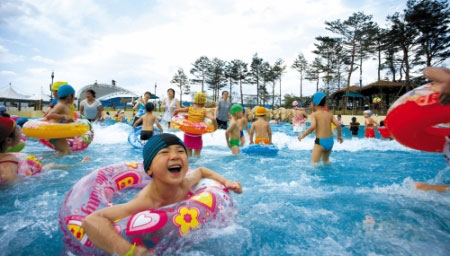
Trips to the beach, barbecues, watermelon and waterparks are all also to be found in plenty during Korea's hottest months. And, of course, it is obligatory for me to share with you a summer k-pop treat... this song was specially created as a promo for Korea's biggest waterpark, Caribbean Bay.
Monday, July 5, 2010
Happy Fourth!
Yesterday was quite an international 4th of July celebration for me. Two friends of mine threw a picnic to celebrate America's Independence Day, Canada's Independence Day (July 1st), and a Korean friend's birthday, all wrapped up in one! We enjoyed good company, good weather, and good food. After the picnic, a few of us stayed to play Apples to Apples, watch a movie, and, when it finally got dark out, shoot fireworks in the park. We definitely drew a lot of attention there; a bunch of Korean kids joined us in cheering and waving sparklers, and a group of Americans who saw us-- one of whom turned out to be a North Carolina native-- hurriedly bought some fireworks of their own to add to the festivities. It all made for a really great day full of friends and fun.
I would have to say that for me, though, the absolute BEST treat of the day was the amazing batch of red velvet cupcakes with cream cheese icing that one of our Canadian friends made to celebrate Canada Day.
 So yummy!
I haven't been able to do any baking myself over the past year-- oven's are a rare thing in Korean households. So it makes me really excited to know that I will VERY SOON be back in the states and will once again be able to bake lots of sweet treats of my own! In fact, that may be one of the things that I'm most looking forward to doing, so I'll just give you fair warning now-- don't be surprised if this travelogue suddenly transforms itself into a baking blog in about a month's time... :)

I would have to say that for me, though, the absolute BEST treat of the day was the amazing batch of red velvet cupcakes with cream cheese icing that one of our Canadian friends made to celebrate Canada Day.
 So yummy!
 I haven't been able to do any baking myself over the past year-- oven's are a rare thing in Korean households. So it makes me really excited to know that I will VERY SOON be back in the states and will once again be able to bake lots of sweet treats of my own! In fact, that may be one of the things that I'm most looking forward to doing, so I'll just give you fair warning now-- don't be surprised if this travelogue suddenly transforms itself into a baking blog in about a month's time... :)
Happy Birthday, America!
I can't wait to see you soon!
I can't wait to see you soon!

Friday, July 2, 2010
This guy is awesome
I tend to read a lot of news and other articles on China and North Korea these days. Given where I am living right now, and the current political climate, I guess it would be irresponsible not to. There are many daunting challenges to be faced in this region, and often, the news that I read is far from encouraging. Perhaps it is for that reason that I was so deeply struck by a certain article I recently came across in the Christian Science Monitor. It relays the story of an amazing man, formerly imprisoned by North Korean soldiers, who has now returned to build a university for his former captors.


On a Korean War battlefield in 1950, the young, patriotic Kim Chin-kyung, then just 15, lay limp on the ground, wounded by shrapnel. In the months leading up to that moment, nearly all of the 800 troops in his South Korean Army unit had been wiped out. He wasn't sure if he would make it, either. So he struck a deal with his creator. "I told God that if I survived, I would return the love to my enemies," he says-- his enemies at the time being North Korean and Chinese soldiers. [...Read the full article!!...]And love them he did. Despite all the naysayers, this man has put everything he has into serving the North Korean and Chinese people. And they have responded favorably in return. Below I've re-pasted some of my favorite quotes from the article. Kim preaches a message of the power of love to change the world-- a message that to many may seem idealistic at best and completely false at worst. But there is nothing at all hollow or empty in what he has accomplished. His actions speak boldly and powerfully, and add undeniable force to his words.
Ask Kim about where he finds his inspiration, and he'll always say "love." The cheerful professor sees love as a force that stretches across borders, with education as a toolbox to apply it.
[...]"Their political system doesn't matter," he says, referring to his first project in China. "If you approach them with love, they will move their hearts."
[...] PUST is funded mostly by aid groups and through Kim's own savings, which he earned from running three small businesses in South Korea and Florida between the 1960s and 1980s and by selling his house and belongings. "I started the businesses to fund the universities," he says. "Peace has a price, and it should be paid by those who have money."
I am inspired by this man. His story is a tangible picture of the power in taking bold chances to live out real, passionate and compassionate love. And it has given me a much needed reminder of just how much one person motivated by love can do.Money, however, was not the deciding factor in Kim's success. Rather, it was his passion for education.
"When I went to China and North Korea, I told them I was not a capitalist or a communist," he says. "I was simply a 'love-ist.' "
Thursday, July 1, 2010
Global English Camp
Many of you reading this probably know well by now about my heart for the people of North Korea. Over the course of the past few months I've had the chance to participate in a number of volunteer opportunities and events that have helped me to learn more about their issues and have allowed me to become more involved in serving the community of North Korean defectors living here in the South. And as I have grown both in knowledge and in genuine love for Korea and its people, my purpose and vision for my time here have evolved, so that lately I have also been spending a great deal of time and effort to lay down the groundwork that will allow me to devote myself more fully to these kinds of efforts when I return next year.
This past week I had the privilege of serving as a lead teacher in the 2010 Global English Camp, an annual initiative of People for Successful Corean Reunification (PSCORE). It was an experience that ranked high among the most meaningful and fulfilling that I have had in my time here in Korea. PSCORE is a NGO that was established as a result of the vision of a small but passionate group of young North Korean defectors, South Korean university students, and foreigners. The organization, now with offices in both D.C. and Seoul, advocates for the human rights of the North Korean people and strives to promote mutual understanding and dialogue about issues of peace and democracy between North and South Korea. They also work to support refugees from the North by equipping them with the skills and tools they need in order to build new lives in South Korea.
The Global English Camp is one program that serves these aims. For one thing, English is the language of success in South Korea, but in North Korea it is a language generally known only by the super-elite. Along with their year-round tutoring program, this English camp is one way for PSCORE to help lessen this gap. The camp was also an opportunity for the North Korean students to learn about the meaning of democracy and come to a better understanding of democratic processes and how they as citizens can participate in them. To this end, the camp held a mock presidential election, as well as offered a number of seminars related to democracy. These included a leadership seminar by a leading Korean university on the meaning of leadership and the definition a true leader, and a lecture about democracy and democratic election by two representatives from the U.S. Department of State. The students also all participated in a quiz-show style game that featured trivia about democracy around the world.
Another main purpose of the camp was to promote dialogue about human rights and reunification between all of the North Korean students, South Korean students, and foreigners in attendance. Two representatives from the Hanns-Seidel Foundation came and gave a talk outlining the successes and challenges of German reunification and how these might be useful in discussions about Korean reunification. There was also a seminar by PSCORE staff on the process of policy making and its role in protecting human rights. After each seminar we were able to break into small groups and discuss these ideas as they relate to the relationship between North Korea, South Korea, and the rest of the world. Though some students had much more advanced English than others, the South Korean students were able to help with translation and vocabulary, so that the language barrier wasn't an issue even in discussing such advanced and challenging topics. I was quite impressed with how well everyone worked together, and how earnestly they desired to understand one another's viewpoints.
One final aim of the camp was to increase global awareness, so there was also one evening where each group did an interactive cultural presentation on a country of their choice. Our group chose to present on Egypt and played a game of charades to teach about Egyptian "firsts." Our final first, meant to be unveiled at the end of the game, was belly dancing. We intended to close out the show with a fun video of some pretty impressive belly dancing, but the internet decided to quit working at just that moment. So, instead, I ended up putting all that time spent searching belly dancing videos to good use and teaching everyone a move called the "snake arms." I'd never even tried it myself before, so it was pretty ridiculous looking I'm sure-- but fun. And the other groups' presentations were all equally, if not more, entertaining. In fact, one of the highlights/ most surreal moments of the entire weekend for me was seeing a bunch of North Koreans line-dancing to "Boot Scootin' Boogie" as a part of their presentation on the American Midwest.
In addition to all of these activities (and other just-for-fun team building ones!), a great deal of our time was spent working in our groups for the mock presidential election-- essentially the central event of the camp. There were four groups who formed our English camp's 4 main political parties. Each of these elected one of their North Korean members to be their presidential candidate. Others had jobs such as head speech writer and PR rep. As a group they created posters, performed exciting and creative campaign events, and participated in a presidential debate. There was also one media group, whose job was to conduct interviews, write press releases, and share news about the presidential race. And lastly, there was the "Electoral Committee." I served as the lead teacher for this group. We were essentially in charge of running the business end of the mock election: creating rules and standards of conduct, designing and mediating the debates, evaluating the campaigning sessions, organizing the logistics of the election, counting votes, and conducting the inaugural ceremony. It was a ton of work, but my members pulled together well and made it all happen.
Our members were quite diverse, and included an assistant teacher from California, four South Korean university students, an international student from China, and four students from North Korea. One of these North Korean students lived in Georgia for two years and demonstrated a passionate love for beer and politics; another, though initially quiet and unsure, over the course of the camp revealed himself to be extraordinarily hardworking and brave; our third student was open from the get-go, loving to laugh, flirt, and engage in meaningful conversations; and the fourth, an aspiring teacher, had a reflective and honest spirit that was remarkably infectious. We all got to know one another surprisingly well in such a short period of time, and every single person was able to bring something unique and valuable to the group. What these students have overcome and the ways that they are adapting and striving to use their painful experiences for the sake of their fellow countrymen was beyond inspiring.
I learned a lot from the perspectives of my peers, and really appreciated the fact that everyone brought different ideas and life experiences to the table. Often in talks about North Korea it is easy for those of us who are focusing on the plight of the refugees to vilify certain outside groups or governments-- especially the Chinese. This is because the only means of escape from North Korea is to cross the border into China, but the government there views escapees as criminals and sends them back into the hands of North Korean officials to be imprisoned and often tortured (or worse) if discovered. The Chinese government also refuses citizenship to children born of North Korean mothers, leaving a number of these children stateless, orphaned, and without education. So, in light of this, I thought it was especially beneficial to our group not only to have the input of four refugees who had recently escaped via the underground route through China, but also to have such a thoughtful Chinese student among us who could share with us both her love for her country and her care for the people of North Korea, and who was willing to offer her perspective as a part of our dialogue.
It honestly was such a blessing and a privilege for me to be able to be a part of this camp; there is so much more that I could say about it. I was challenged and put outside of my comfort zone, and at the same time I really felt I was completely in my element there. The feedback from the students was very positive, and, as I said to all the camp participants during our candlelight vigil on the final night, being around such a genuine, caring, and intelligent group-- and having the opportunity to witness their passion and compassion-- gave me a lot of hope for the future of the Korean peninsula.
I know there has been a lot of gum flapping in the US media about North Korea and war lately, and I understand the fears that play into that, but to be perfectly honest, I really just long for the day when we as a world community become as concerned with the human rights violations in the North as we are with any potential nuclear attack. Thankfully, this camp and the people who participated in it are each in their own way bringing us a few small steps closer to seeing that become a reality.
This past week I had the privilege of serving as a lead teacher in the 2010 Global English Camp, an annual initiative of People for Successful Corean Reunification (PSCORE). It was an experience that ranked high among the most meaningful and fulfilling that I have had in my time here in Korea. PSCORE is a NGO that was established as a result of the vision of a small but passionate group of young North Korean defectors, South Korean university students, and foreigners. The organization, now with offices in both D.C. and Seoul, advocates for the human rights of the North Korean people and strives to promote mutual understanding and dialogue about issues of peace and democracy between North and South Korea. They also work to support refugees from the North by equipping them with the skills and tools they need in order to build new lives in South Korea.
The Global English Camp is one program that serves these aims. For one thing, English is the language of success in South Korea, but in North Korea it is a language generally known only by the super-elite. Along with their year-round tutoring program, this English camp is one way for PSCORE to help lessen this gap. The camp was also an opportunity for the North Korean students to learn about the meaning of democracy and come to a better understanding of democratic processes and how they as citizens can participate in them. To this end, the camp held a mock presidential election, as well as offered a number of seminars related to democracy. These included a leadership seminar by a leading Korean university on the meaning of leadership and the definition a true leader, and a lecture about democracy and democratic election by two representatives from the U.S. Department of State. The students also all participated in a quiz-show style game that featured trivia about democracy around the world.
Another main purpose of the camp was to promote dialogue about human rights and reunification between all of the North Korean students, South Korean students, and foreigners in attendance. Two representatives from the Hanns-Seidel Foundation came and gave a talk outlining the successes and challenges of German reunification and how these might be useful in discussions about Korean reunification. There was also a seminar by PSCORE staff on the process of policy making and its role in protecting human rights. After each seminar we were able to break into small groups and discuss these ideas as they relate to the relationship between North Korea, South Korea, and the rest of the world. Though some students had much more advanced English than others, the South Korean students were able to help with translation and vocabulary, so that the language barrier wasn't an issue even in discussing such advanced and challenging topics. I was quite impressed with how well everyone worked together, and how earnestly they desired to understand one another's viewpoints.
One final aim of the camp was to increase global awareness, so there was also one evening where each group did an interactive cultural presentation on a country of their choice. Our group chose to present on Egypt and played a game of charades to teach about Egyptian "firsts." Our final first, meant to be unveiled at the end of the game, was belly dancing. We intended to close out the show with a fun video of some pretty impressive belly dancing, but the internet decided to quit working at just that moment. So, instead, I ended up putting all that time spent searching belly dancing videos to good use and teaching everyone a move called the "snake arms." I'd never even tried it myself before, so it was pretty ridiculous looking I'm sure-- but fun. And the other groups' presentations were all equally, if not more, entertaining. In fact, one of the highlights/ most surreal moments of the entire weekend for me was seeing a bunch of North Koreans line-dancing to "Boot Scootin' Boogie" as a part of their presentation on the American Midwest.
In addition to all of these activities (and other just-for-fun team building ones!), a great deal of our time was spent working in our groups for the mock presidential election-- essentially the central event of the camp. There were four groups who formed our English camp's 4 main political parties. Each of these elected one of their North Korean members to be their presidential candidate. Others had jobs such as head speech writer and PR rep. As a group they created posters, performed exciting and creative campaign events, and participated in a presidential debate. There was also one media group, whose job was to conduct interviews, write press releases, and share news about the presidential race. And lastly, there was the "Electoral Committee." I served as the lead teacher for this group. We were essentially in charge of running the business end of the mock election: creating rules and standards of conduct, designing and mediating the debates, evaluating the campaigning sessions, organizing the logistics of the election, counting votes, and conducting the inaugural ceremony. It was a ton of work, but my members pulled together well and made it all happen.
Our members were quite diverse, and included an assistant teacher from California, four South Korean university students, an international student from China, and four students from North Korea. One of these North Korean students lived in Georgia for two years and demonstrated a passionate love for beer and politics; another, though initially quiet and unsure, over the course of the camp revealed himself to be extraordinarily hardworking and brave; our third student was open from the get-go, loving to laugh, flirt, and engage in meaningful conversations; and the fourth, an aspiring teacher, had a reflective and honest spirit that was remarkably infectious. We all got to know one another surprisingly well in such a short period of time, and every single person was able to bring something unique and valuable to the group. What these students have overcome and the ways that they are adapting and striving to use their painful experiences for the sake of their fellow countrymen was beyond inspiring.
I learned a lot from the perspectives of my peers, and really appreciated the fact that everyone brought different ideas and life experiences to the table. Often in talks about North Korea it is easy for those of us who are focusing on the plight of the refugees to vilify certain outside groups or governments-- especially the Chinese. This is because the only means of escape from North Korea is to cross the border into China, but the government there views escapees as criminals and sends them back into the hands of North Korean officials to be imprisoned and often tortured (or worse) if discovered. The Chinese government also refuses citizenship to children born of North Korean mothers, leaving a number of these children stateless, orphaned, and without education. So, in light of this, I thought it was especially beneficial to our group not only to have the input of four refugees who had recently escaped via the underground route through China, but also to have such a thoughtful Chinese student among us who could share with us both her love for her country and her care for the people of North Korea, and who was willing to offer her perspective as a part of our dialogue.
It honestly was such a blessing and a privilege for me to be able to be a part of this camp; there is so much more that I could say about it. I was challenged and put outside of my comfort zone, and at the same time I really felt I was completely in my element there. The feedback from the students was very positive, and, as I said to all the camp participants during our candlelight vigil on the final night, being around such a genuine, caring, and intelligent group-- and having the opportunity to witness their passion and compassion-- gave me a lot of hope for the future of the Korean peninsula.
I know there has been a lot of gum flapping in the US media about North Korea and war lately, and I understand the fears that play into that, but to be perfectly honest, I really just long for the day when we as a world community become as concerned with the human rights violations in the North as we are with any potential nuclear attack. Thankfully, this camp and the people who participated in it are each in their own way bringing us a few small steps closer to seeing that become a reality.
Tuesday, June 15, 2010
World Cup Fever

Korea’s got World Cup fever… bad. Back in 2002, Korea had the honor of hosting the Cup AND placing 4th. Since then, the nation has been a particularly soccer crazy one—and I am completely loving every minute of it! I was in China for the last World Cup, in Jordan for the 2008 Euro Cup, and am now experiencing this year’s World Cup in Korea—- and though I’ve haven’t exactly been planning it out that way, I am starting to think I should turn this into a tradition, because it really is GREAT being in a country that actually *cares* about soccer for this event!
Soccer and the excitement of the World Cup, perhaps more than any other single sport, truly brings the world together. But, being from the one country who doesn’t share the rest of the planet’s intense love and passion for the game, I have always felt a bit excluded from that experience. Because while Korea has pop stars and Olympian figure skaters getting together to make special songs just for the event...
....we in American have Stephen Colbert making this:
| The Colbert Report | Mon - Thurs 11:30pm / 10:30c | |||
| Sport Report - Soccer Debate - Marc Fisher & Mark Starr | ||||
| ||||
I personally have always gotten really into the games—and the emotional intensity surrounding me here only fuels my longstanding love for the sport. The US’s lucky draw with England completely wore down my nerves (and kind of made me want to punch things at times), while Korea’s upset over Greece was really exciting, and had me, along with the rest of Korea, feeling pretty elated. Random shouts of “DAE HAN MIN GUK!!” and “KOREA FIGHTING!” could be heard from *literally* every street corner that night, and not at all infrequently even in the days that followed. Ji-Sung Park, the super energetic 5’9” Manchester United midfielder who all of the Korean girls go ga-ga for, and all of the Korean boys aspire to be, is arguably the most loved and revered person in this country right now.
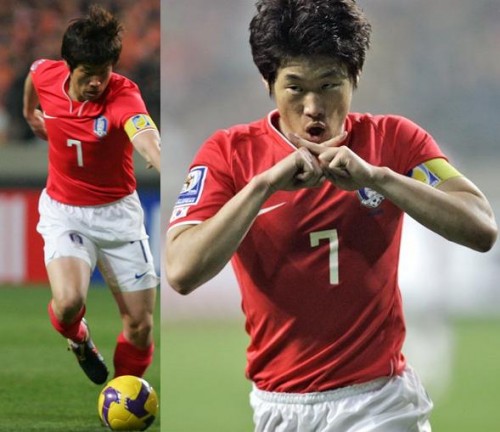
The most personally significant thing about this whole experience for me, though, has been my coming to the realization in watching the first round that I have developed the same sense of ownership and feelings of pride towards Korea’s national team that I feel towards the US. It has made me recognize just how attached and connected I have become to my mother’s homeland in my time here—which is great, because that’s exactly what I had hoped would begin to happen when I made the decision to come.
...And in other related news, I told my students that if any of them could learn this dance and perform it for me before the World Cup is over I would give them a big prize.
No one has taken me up on it yet, but I *have* spotted a few groups of kids practicing :P
Korea fighting!!! v(^_^)v
Friday, June 11, 2010
Babies, Weddings, and Funerals
Seems that lots of monumental events have been happening in the lives of those around me here in Korea lately.
Two close friends of mine have recently gotten engaged and are getting married in just two short months. They came to Korea around the same time I did and met one another here, so I have had the opportunity to witness their relationship from the very beginning, and it's really special. Another two friends of mine-- a really great couple from Nigeria-- are expecting their first baby soon. And, in addition to experiencing the excitement involved in planning for bachelorette excursions and baby showers with my foreign friends, I've recently also had the opportunity to experience both the joy of a wedding and the sadness of a funeral in the lives of two of my Korean coworkers.
I've gotten a lot of questions about these last two events in particular, and it might disappoint some of you to hear me report that there is not much of a difference between a Korean wedding and an American one. Nor is there much of a difference between a Korean funeral and an American one. Undoubtedly this is largely due to the recent westernization of the Korean hemisphere, but I also think that, more significantly and on a more fundamental level, weddings and funerals the world over have certain qualities about them that are simply universal.
For instance, western countries and other "modernized" nations like Korea may tend to emphasize a movie-like version of romantic love in marriage, while other peoples do not believe that to be the institution's main purpose, but I have never heard of a culture in which a wedding does not represent on some level the satisfaction of a human longing for relationship and connectivity. Whether this is framed on the individual level, or on a familial or even communal level, it is still something that rings true throughout every society and culture. Likewise, a funeral-- whether it is done by viewing the body as in the US, cremating it as in India, or by bowing respectfully before a photo of the deceased (no dead bodies involved) as in Korea-- is always a way for the living to process death. Death is a part of all our lives, and it is a universally difficult, complex, and transcendent experience that needs navigating.
I imagine that no matter where in the world I travel, weddings and funerals will never be so foreign as to fail to reflect these two aspects of human need and experience. And all the rest is mere packaging and fluff. It may be beautiful packaging and the differences may be exciting to learn about-- certainly a joy to embrace and experience. But for me, the most beautiful experience of all, and the one worth traveling the world over to have, is to stand in a crowd and feel the same joy and mourning reflected across every kind of linguistic and cultural boundary that should to divide us, and to know that it is our shared identity as images of our Creator that connects our hearts.
Two close friends of mine have recently gotten engaged and are getting married in just two short months. They came to Korea around the same time I did and met one another here, so I have had the opportunity to witness their relationship from the very beginning, and it's really special. Another two friends of mine-- a really great couple from Nigeria-- are expecting their first baby soon. And, in addition to experiencing the excitement involved in planning for bachelorette excursions and baby showers with my foreign friends, I've recently also had the opportunity to experience both the joy of a wedding and the sadness of a funeral in the lives of two of my Korean coworkers.
I've gotten a lot of questions about these last two events in particular, and it might disappoint some of you to hear me report that there is not much of a difference between a Korean wedding and an American one. Nor is there much of a difference between a Korean funeral and an American one. Undoubtedly this is largely due to the recent westernization of the Korean hemisphere, but I also think that, more significantly and on a more fundamental level, weddings and funerals the world over have certain qualities about them that are simply universal.
For instance, western countries and other "modernized" nations like Korea may tend to emphasize a movie-like version of romantic love in marriage, while other peoples do not believe that to be the institution's main purpose, but I have never heard of a culture in which a wedding does not represent on some level the satisfaction of a human longing for relationship and connectivity. Whether this is framed on the individual level, or on a familial or even communal level, it is still something that rings true throughout every society and culture. Likewise, a funeral-- whether it is done by viewing the body as in the US, cremating it as in India, or by bowing respectfully before a photo of the deceased (no dead bodies involved) as in Korea-- is always a way for the living to process death. Death is a part of all our lives, and it is a universally difficult, complex, and transcendent experience that needs navigating.
I imagine that no matter where in the world I travel, weddings and funerals will never be so foreign as to fail to reflect these two aspects of human need and experience. And all the rest is mere packaging and fluff. It may be beautiful packaging and the differences may be exciting to learn about-- certainly a joy to embrace and experience. But for me, the most beautiful experience of all, and the one worth traveling the world over to have, is to stand in a crowd and feel the same joy and mourning reflected across every kind of linguistic and cultural boundary that should to divide us, and to know that it is our shared identity as images of our Creator that connects our hearts.
Friday, June 4, 2010
The New Dork
The Korea Times posted an article yesterday touting Twitter as a significant force in this week's elections. While I knew that Korean people knew about Twitter, because I have often been asked if I was on it-- usually before being barraged with questions about Obama-- I didn't know that many Korean nationals actually use the site. Though the article seemed to possibly be overstating the case-- a 400,000 person presence on Twitter significantly turned the outcome of elections?-- it brought me back mentally to 2008 in the US and to the feeling of familiarity and home.
I suppose, though, that I shouldn't have been as struck by this as I was. After all, one of the top 3 aspects of Korean culture that foreigners here name as most notable is TECHNOLOGY. I was initially surprised when I learned this-- I probably would have said something about kimchi, or the Korean work ethic myself-- but that is probably just because I am completely technologically challenged and so do not have my eyes open to that sort of thing; my grandparents and I relate well when it comes to stuff like computers and text messages. With a little research, however, I came to learn that Korea is in fact the seventh most wired country in the world, and is ranked second only to Hong Kong in Asia according to Forbes magazine, which doles out its rankings not only on based on tech-usage, but tech-friendly government policies. So it seems that Korea and technology experience a mutual loving relationship.
I have certainly seen this mutual embrace reflected by my students. These kids are all about their computer games. It is literally all they claim to do, aside from study, sleep and eat. In my classes, it has even gotten to the point that anytime I am teaching a lesson related to hobbies, I qualify that speaking about computer games is off limits, just so they have the opportunity to learn some new vocabulary. Even so, their resolve to talk about computers is unshakable. Today, I asked a student what kind of house he wanted to have when he grew up, and he answered that he wanted a house with four P.C. rooms devoted solely to gaming. At home, a statement like that might have earned that student a few less-than-kind snickers, but here it garnered a roomful of enthusiastic nods of agreement.
I'm always looking for ways to harness this enthusiasm for technology to excite the students about English. Recently, I've been translating songs into text lingo and having them compete to decode the songs and guess the name of the artist. I've also come across this remake of Empire State of Mind called The New Dork- Entrepreneur State of Mind. The students in my advanced classes completely get a kick out of it, because the lyrics all refer to a world they can relate to well.
I suppose, though, that I shouldn't have been as struck by this as I was. After all, one of the top 3 aspects of Korean culture that foreigners here name as most notable is TECHNOLOGY. I was initially surprised when I learned this-- I probably would have said something about kimchi, or the Korean work ethic myself-- but that is probably just because I am completely technologically challenged and so do not have my eyes open to that sort of thing; my grandparents and I relate well when it comes to stuff like computers and text messages. With a little research, however, I came to learn that Korea is in fact the seventh most wired country in the world, and is ranked second only to Hong Kong in Asia according to Forbes magazine, which doles out its rankings not only on based on tech-usage, but tech-friendly government policies. So it seems that Korea and technology experience a mutual loving relationship.
I have certainly seen this mutual embrace reflected by my students. These kids are all about their computer games. It is literally all they claim to do, aside from study, sleep and eat. In my classes, it has even gotten to the point that anytime I am teaching a lesson related to hobbies, I qualify that speaking about computer games is off limits, just so they have the opportunity to learn some new vocabulary. Even so, their resolve to talk about computers is unshakable. Today, I asked a student what kind of house he wanted to have when he grew up, and he answered that he wanted a house with four P.C. rooms devoted solely to gaming. At home, a statement like that might have earned that student a few less-than-kind snickers, but here it garnered a roomful of enthusiastic nods of agreement.
I'm always looking for ways to harness this enthusiasm for technology to excite the students about English. Recently, I've been translating songs into text lingo and having them compete to decode the songs and guess the name of the artist. I've also come across this remake of Empire State of Mind called The New Dork- Entrepreneur State of Mind. The students in my advanced classes completely get a kick out of it, because the lyrics all refer to a world they can relate to well.
Tuesday, June 1, 2010
Election Day
Two more days off of work this week. It's kind of strange having so many teaching days canceled so close together-- and inconvenient, since we are nearing the end of the semester and there doesn't ever quite seem to be enough time to accomplish all that is required. But, given how busy I am right now both at work and with other responsibilities, it has been helpful in a way to get a little bit of time to devote to planning, prioritizing and organizing. I feel a bit more on top of things, and not as much like I am playing catch-up.
Another perk of the vacation days-- they mark the end of Korea's very... um, Korean?... campaigning process for local elections. Tomorrow is Election day (by the way, try saying that with a Korean accent-- l's are r's-- and that's what I've been hearing all week), which is treated as a national holiday, giving everyone the day off in order to take away any excuse not to vote.
Election season is much shorter here than what we experience in the US, but it packs a bit more of a punch. For the past few weeks, every street corner, subway station and open public space has been filled with people, mostly middle-aged, in various *matching neon-colored outfits* doing *choreographed dances and cheers* in front of giant screens that display the face of their chosen candidate. Yep. I'm really sorry I don't have pictures or video to share this phenomenon with you, but if you are picturing it and it looks more than slightly ridiculous, you are probably imagining it correctly. Now add to that image fleets of oddly designed colorful trucks that drive up and down the streets blaring music and rhetoric, most often manned by a pair of women-- dressed of course in their candidate's signature color-- riding in the back to dance, wave, smile and bow at every passer-by... and there you have a pretty accurate picture of my daily surrounding for the past month.
I've definitely enjoyed it while it's lasted, and I definitely think I will equally enjoy it when it is over.
:)
UPDATE: Here are a few photos of Korean election campaigners that I stole from a friend. They don't completely give an adequate picture of the phenomenon I described, but they do give a small taste.


Another perk of the vacation days-- they mark the end of Korea's very... um, Korean?... campaigning process for local elections. Tomorrow is Election day (by the way, try saying that with a Korean accent-- l's are r's-- and that's what I've been hearing all week), which is treated as a national holiday, giving everyone the day off in order to take away any excuse not to vote.
Election season is much shorter here than what we experience in the US, but it packs a bit more of a punch. For the past few weeks, every street corner, subway station and open public space has been filled with people, mostly middle-aged, in various *matching neon-colored outfits* doing *choreographed dances and cheers* in front of giant screens that display the face of their chosen candidate. Yep. I'm really sorry I don't have pictures or video to share this phenomenon with you, but if you are picturing it and it looks more than slightly ridiculous, you are probably imagining it correctly. Now add to that image fleets of oddly designed colorful trucks that drive up and down the streets blaring music and rhetoric, most often manned by a pair of women-- dressed of course in their candidate's signature color-- riding in the back to dance, wave, smile and bow at every passer-by... and there you have a pretty accurate picture of my daily surrounding for the past month.
I've definitely enjoyed it while it's lasted, and I definitely think I will equally enjoy it when it is over.
:)
UPDATE: Here are a few photos of Korean election campaigners that I stole from a friend. They don't completely give an adequate picture of the phenomenon I described, but they do give a small taste.


Sunday, May 23, 2010
Happy Birthday Buddha
I think Korea in May has the greatest number of holidays that I have ever experienced in a single month. Not that I'm complaining.
This past Friday we had the day off (once again) for Buddha's birthday-- a very festive day in a country that has historically been largely Buddhist. Around 15-20 percent of the population currently identifies Buddhism as their religion, but the cultural impact of the Buddhist tradition, especially prior to the relatively recent rise of Christianity in Korea, is much more widespread than these numbers suggest. Festivals surrounding this holiday, considered by many Buddhist's to be the most important holiday in their tradition, have lasted the better half of the month-- the largest being Seoul's Lotus Lantern Festival.

I spent most of the day in Samcheon-dong, home to Bongeun Temple, where, as a part of the festival, the monks featured a colorful exhibition of handmade traditional lanterns. The streets in Samcheon-dong have long been my favorite place in Seoul to spend a laid-back afternoon of shopping or just general meandering. The neighborhood is a seamless melding together of historical Korean landmarks, districts and homes with quaint galleries, shops, cafes and restaurants that often give off (what I imagine to be) a rather European feel.

There are also numerous "tea gardens" in the area, which offer the setting of a traditional Korean tea house, while allowing patrons to enjoy the open air and a beautiful view of traditional homes- or even a Joseon-dynasty palace- against the backdrop of low Korean mountains. I soaked in the view while sipping on strawberry flavored "five-taste tea," a sweet drink made from the fruit of the Chinese magnolia vine, chilled and served with ice cubes that had tiny flower buds frozen inside.
It was lovely, and I don't know that I could have come up with a more idyllic way to have spent the holiday. Days like Friday leave me thoroughly convinced that moving into Seoul when I return to Korea would be the right choice for me.
This past Friday we had the day off (once again) for Buddha's birthday-- a very festive day in a country that has historically been largely Buddhist. Around 15-20 percent of the population currently identifies Buddhism as their religion, but the cultural impact of the Buddhist tradition, especially prior to the relatively recent rise of Christianity in Korea, is much more widespread than these numbers suggest. Festivals surrounding this holiday, considered by many Buddhist's to be the most important holiday in their tradition, have lasted the better half of the month-- the largest being Seoul's Lotus Lantern Festival.

I spent most of the day in Samcheon-dong, home to Bongeun Temple, where, as a part of the festival, the monks featured a colorful exhibition of handmade traditional lanterns. The streets in Samcheon-dong have long been my favorite place in Seoul to spend a laid-back afternoon of shopping or just general meandering. The neighborhood is a seamless melding together of historical Korean landmarks, districts and homes with quaint galleries, shops, cafes and restaurants that often give off (what I imagine to be) a rather European feel.
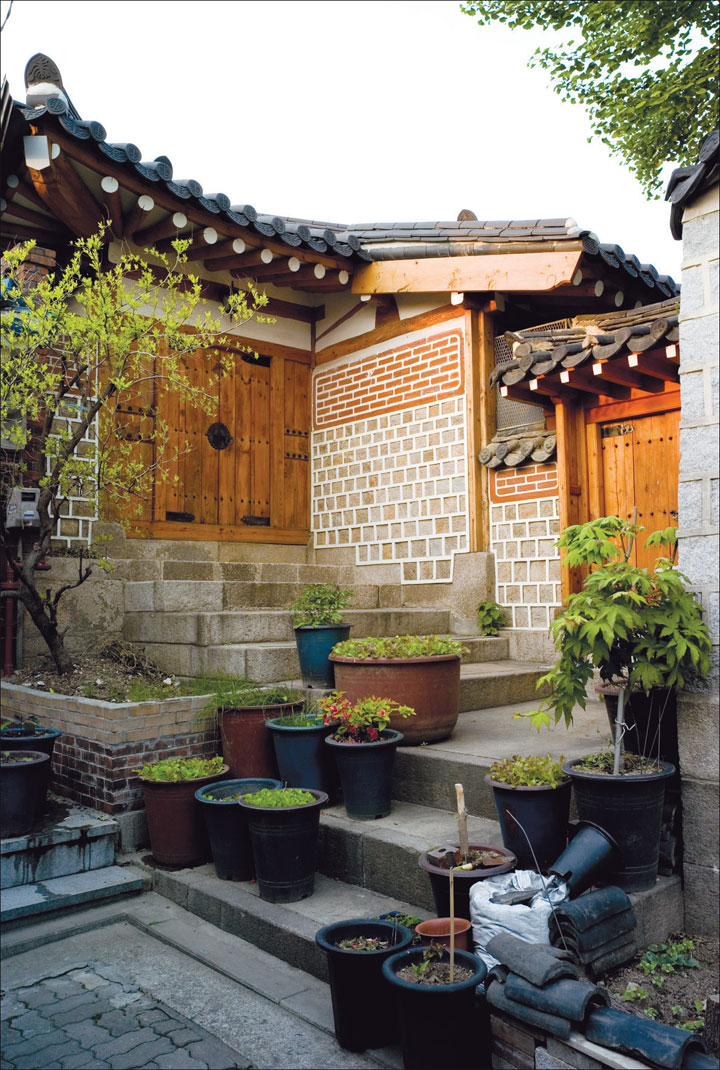
There are also numerous "tea gardens" in the area, which offer the setting of a traditional Korean tea house, while allowing patrons to enjoy the open air and a beautiful view of traditional homes- or even a Joseon-dynasty palace- against the backdrop of low Korean mountains. I soaked in the view while sipping on strawberry flavored "five-taste tea," a sweet drink made from the fruit of the Chinese magnolia vine, chilled and served with ice cubes that had tiny flower buds frozen inside.
It was lovely, and I don't know that I could have come up with a more idyllic way to have spent the holiday. Days like Friday leave me thoroughly convinced that moving into Seoul when I return to Korea would be the right choice for me.
Friday, May 14, 2010
The Dark Underbelly of Teacher's Day

The Month of Family, as May is often referred to in Korea, includes Children's Day, Parent's Day, and finally Teacher's Day on May 15th. The inclusion of teachers in a month set aside to honor the most intimate and foundational of social systems reflects the high regard with which the teaching profession has long been held in Korean society. And while this sentiment may be waning somewhat among younger generations, teachers are still widely acknowledged as one of the most important influences on a young person's development and ability to succeed in life. Teacher's Day is a day set apart to acknowledge the hard work that teachers invest in the future of the nation.
The respect and honor traditionally shown to teachers has, of course, a direct correlation to the extraordinarily high emphasis placed on education in Korea-- something I have mentioned here many times before. And with the exponential rise in educational and professional competition featuring so prominently in South Korea's recent history, it comes as no surprise that this enthusiasm and competitiveness has infiltrated the celebration of Teacher's Day as well.
My extensive Wikipedia research on the subject [;)] returned the following...
Originally [Teacher's Day in Korea] was started by a group of red-cross youth team members who visited their sick ex-teachers at hospitals. The national celebration ceremony had been stopped between 1973 and 1982 and it resumed after that. On the celebration day, teachers are usually presented with carnations by their students, and both enjoy a shorter school day. Ex-students pay their respects to the former teachers by visiting them and handing them a carnation. Many schools now close on Teacher's Day because of the rampant bribery implicit in the expensive gifts often given to teachers.
At my own school, Teacher's Day is treated just as any other school day, a conscious decision having been made to avoid any school-wide celebration or endorsement of the day for exactly the reason mentioned above-- bribery and extravagant gifts have in the past caused scandal and dissension among the parents and within the community.
As a native English-speaking teacher with little say over the children's grades, I am fortunately not impacted by these kinds of politics, and for me it has proved a sweet day. Knowing that they will not see me tomorrow (school is held every other Saturday, but I only work Monday through Friday on any given week), a few of my students have given me gifts of cards, candy, and various little origami creations. They also asked to sing for me in class this morning, and while I know that atleast 80% of their motivation in this was to avoid having to do work for the day, it nonetheless put a smile on my face.
Monday, May 10, 2010
Happy Parent's Day/ Mother's Day!
 Parent's Day in Korea and Mother's Day in the US happen to fall on the same weekend. Parent's Day, as you might have guessed, is essentially like a Mother's Day and Father's Day rolled up into one, and follows only a few days after Children's Day. On Parent's Day, children and adults alike typically present their parents with a gift and a carnation each.
Right now, it is still Mother's Day in the U.S.-- a day I have been looking forward to for the past few weeks. This morning I surprised my mother and grandmother with a video gift of myself singing a traditional Korean song that I have been working hard to learn. (Woohoo! Korean lessons paying off!) I thought of posting the video here, but my rendition is really something that only a mother's ears could love. Instead, I've posted the lyrics and translation below... translates a little awkwardly, but is really a beautiful song and a sweet tribute to a mother's self-sacrificial love.
*Transcript and translation:*
낳실제 괴로움 다잊으시고
She forgets all her pain when she gives birth
기를제 밤 낮으로 애쓰는 마음
She does everything to raise me day and night
진 자리 마른자리 갈아뉘시며
She always finds a warm dry place for me
손발이 다닳도록 고생하시네
She goes through so much hardship in her life
하늘아래 그무엇이 넓다하리요
What would be greater under the sky
어머님의 희생은 가이없어라
Her sacrifice is limitless
P.S. Shout out to my three AMAZING best friends who graduated from UNC today!! Julia, Jamie, and Freda-- so proud and excited for you girls! You are my role models-- can't wait to witness all of the amazing things you are going to do with your futures. The world has no idea what's coming... :) Love, with all my heart!
Wednesday, May 5, 2010
In Celebration of Children's Day

International Children's Day is officially recognized across the world on June 1st, but in South Korea is celebrated on May 5th.
And it is a BIG deal here. EVERYONE has the day off on Children's Day. It is a day for parents to shower their children with gifts and take them on excursions to zoos, movies, parades, amusement parks, and even air shows. All of Korea caters to children on this day, with stores giving away free treats and having all kinds of characters-- from Batman to Hello Kitty-- line the streets to take pictures with the kids. It made me happy to be able to walk around all day and see kids being celebrated and loved on. And in a culture that requires so much of it's men in the workforce, it was especially great to see so many fathers take this opportunity to spend time with their children and families.
I also learned a tid-bit about the history of Children's Day today that took my appreciation for the holiday to even greater heights. Apparently, under Japanese colonial rule, May 5th was celebrated as "Boy's Day," but in 1975 the Korean government replaced that holiday with "Children's Day," making the simple statement that, "Even though many families may still want a son, since a son must look after his parents when they get old, we are all important." Thus, Children's Day is a marker of Korea's progress towards embracing the value of *ALL* it's children, and is a tangible picture of this country's desire to overcome cultural norms and stereotypes that have served to devalue women and girls. Knowledge of this history lends even deeper value and meaning to the holiday, and certainly deepens my own love and appreciation for the fact that my mother chose to celebrate Korean Children's Day for my sister and I growing up.
So, in honor of Children's Day in Korea and in keeping with the values that the holiday affirms-- those of equality and the right to life and happiness for ALL children-- I want to share this video from UNICEF with you, and ask you to join me in prayer for the children of our world. (BTW-- the precious faces at 1:32 belong to Korean children, dressed in hanboks, or traditional Korean garb. A-dorable.)
And, on a very directly related note, I'd also like to share and recommend a book that I have recently read. The words "powerful" and "gut-wrenching" fall far short of an apt description for this autobiographical account of Ishmael Beah's experiences as a child soldier in Sierra Leone. To coerce a child into a life of slavery and violence is one of the worst violations against humanity imaginable... And on a day when I am surrounded by the faces of so many children filled with life and joy at the opportunity to simply enjoy being children, I cannot help but mourn for those who have been robbed of that same right. Read this book-- it will be impossible for you to walk away unchanged.

Wednesday, April 28, 2010
April Showers and May Flowers
I have no way to talk about springtime without bombarding you with a million different cliches. Even to simply say "I love spring" seems overused and hollow. But I'm kind of okay with that. In fact, I embrace it. Because the truth is that I DO love spring, and in this season I myself transform into a living, breathing cliche; all I want to do is skip through fields of wildflowers in a flowy white skirt and barefeet (not something you'd want to, or could do, where I live in Korea, by the way).
There seems to be something intrinsic to this season that brings out wild and beautiful desires in my spirit. It awakens my heart to a deep and joy-filled thirst-- thirst for change, for freshness, for freedom and life. It is a thirst that too often lays dormant in the pursuit of comfort and warmth accompanying those long (and, this year, longer than usual) winter months, but that every year, by God's grace given in the changing seasons, refreshes me and brings a new light to my vision of the world around me. Springtime brings with it a reminder of who I am, and points me to the hope, beauty and transforming power of my God.
From the day of my arrival in this country, I have been looking forward to experiencing this season here. Springtime is a source of great national pride for Koreans-- even as early as last summer, when asked how I liked Korea, I was frequently met with, "Oh, well, if you like it now, just wait until SPRING." And I have not been disappointed-- it truly is beautiful. Spring in Korea is marked by blossoming cherry trees at every turn and various flower festivals held in nearly every city. The most popular festivals showcase apricot blossoms, the Japanese dogwood, and, of course, cherry blossoms. Korea can't seem to get enough of them, and neither can I!

Here in Ansan we had our own TULIP festival. Tulips are one of my favorite flowers-- probably second only to pink and red daisies-- and this festival did not disappoint. A beautiful and seemingly endless array of the brightly colored flowers were planted alongside the man-made river that runs through our city, drawing out hundreds of couples and families with strollers and pets in tow to enjoy this season's first real weekend of warmth and sun.
The festival was certainly a nice reprieve from all of the concrete, and, though it was not a field of wildflowers for me to prance through, it still hit me like a breath of fresh air. Because while there is a part of my heart that can only be touched by things that grow wild and unruly, I have also come to realize that there is a unique and particular kind of beauty to be found in a garden of flowers that have been cultivated and toiled over.
I credit C.S. Lewis' Four Loves for waking me up to this beauty. In that book, Lewis uncovers in a well-tended garden a metaphor for love. Embedded in the essential qualities of the garden there is on the one hand a sense of the absolute necessity of the gardener's hard work and care, at the same time that there is also an overwhelming sense that this work pales beside the beauty of the cultivated thing itself-- the thing whose source of energy, life and glory are born out of nature rather than human hands. In the same way, our diligent and often cumbersome toil is necessary in order to maintain and show love, but, ultimately, the source and glory in any display of love, as in a garden, is not our own, but our Father and Creator's.
This analogy resonates powerfully with me. It also gives voice to the reason that I chose the title and header image of this blog to accompany one another. I am thankful for Lewis' ability to articulate and shed light on something that I feel but could not have adequately expressed, and so leave you with his words rather than my own:
There seems to be something intrinsic to this season that brings out wild and beautiful desires in my spirit. It awakens my heart to a deep and joy-filled thirst-- thirst for change, for freshness, for freedom and life. It is a thirst that too often lays dormant in the pursuit of comfort and warmth accompanying those long (and, this year, longer than usual) winter months, but that every year, by God's grace given in the changing seasons, refreshes me and brings a new light to my vision of the world around me. Springtime brings with it a reminder of who I am, and points me to the hope, beauty and transforming power of my God.
From the day of my arrival in this country, I have been looking forward to experiencing this season here. Springtime is a source of great national pride for Koreans-- even as early as last summer, when asked how I liked Korea, I was frequently met with, "Oh, well, if you like it now, just wait until SPRING." And I have not been disappointed-- it truly is beautiful. Spring in Korea is marked by blossoming cherry trees at every turn and various flower festivals held in nearly every city. The most popular festivals showcase apricot blossoms, the Japanese dogwood, and, of course, cherry blossoms. Korea can't seem to get enough of them, and neither can I!

Here in Ansan we had our own TULIP festival. Tulips are one of my favorite flowers-- probably second only to pink and red daisies-- and this festival did not disappoint. A beautiful and seemingly endless array of the brightly colored flowers were planted alongside the man-made river that runs through our city, drawing out hundreds of couples and families with strollers and pets in tow to enjoy this season's first real weekend of warmth and sun.


The festival was certainly a nice reprieve from all of the concrete, and, though it was not a field of wildflowers for me to prance through, it still hit me like a breath of fresh air. Because while there is a part of my heart that can only be touched by things that grow wild and unruly, I have also come to realize that there is a unique and particular kind of beauty to be found in a garden of flowers that have been cultivated and toiled over.
I credit C.S. Lewis' Four Loves for waking me up to this beauty. In that book, Lewis uncovers in a well-tended garden a metaphor for love. Embedded in the essential qualities of the garden there is on the one hand a sense of the absolute necessity of the gardener's hard work and care, at the same time that there is also an overwhelming sense that this work pales beside the beauty of the cultivated thing itself-- the thing whose source of energy, life and glory are born out of nature rather than human hands. In the same way, our diligent and often cumbersome toil is necessary in order to maintain and show love, but, ultimately, the source and glory in any display of love, as in a garden, is not our own, but our Father and Creator's.
This analogy resonates powerfully with me. It also gives voice to the reason that I chose the title and header image of this blog to accompany one another. I am thankful for Lewis' ability to articulate and shed light on something that I feel but could not have adequately expressed, and so leave you with his words rather than my own:
"It is no disparagement to a garden to say that it will not fence and weed itself, nor prune its own fruit trees, nor roll and cut its own lawns. A garden is a good thing but [keeping itself] is not the sort of goodness it has. It will remain a garden, as distinct from a wilderness, only if someone does all these things to it. Its real glory is of quite a different kind. The very fact that it needs constant weeding and pruning bears witness to that glory. It teems with life. It glows with colour and smells like heaven and puts forward at every hour of a summer day beauties with man could never have created and could not even, on his own resources, have imagined... And when the garden is in its full glory the gardener's contributions to that glory have still been in a sense paltry compared with those of nature. Without life springing from the earth, without rain, light and heat descending from the sky, he could do nothing. When he has done all, he has merely encouraged here and discouraged there, powers and beauties that have a different source. "May you all find joy and life in springtime, wherever you are :)
Wednesday, April 21, 2010
Study study study
I'm really working hard these days to improve my Korean. It struck me recently that I will soon have spent a year here, without being able to do much more than introduce myself and give directions to a cab driver in the native language. And that is just sad.
Fortunately, I have an uncle (actually a cousin of my mother's) who agrees with me that this is a major FAIL and has graciously taken it upon himself to tutor me. In exchange for two hours of English "lessons" with me-- he's a movie director, so basically we just read articles about movies and chat about them-- he helps me slowly and awkwardly make my way through a conversational Korean book. He's very patient with me, which I really appreciate, and I'm really grateful to have had this excuse to hang out with him so often in the past couple months-- he's pretty awesome.
Of course, while I'm definitely excited that my Korean is improving, on the flip side, there ARE some perks to NOT knowing the language well. Example: it gives you a great way to keep yourself entertained during those seemingly endless subway rides to and from Seoul...
In addition to studying Korean, I am also trying to brush up on my French and pick up a few phrases in Creole in preparation for my trip to Haiti. My brain is sort of on language overload right now, but I am kind of liking it-- makes me feel a bit more like a world citizen, and a bit less like just another jerky American who expects others to bend to her language needs.
Fortunately, I have an uncle (actually a cousin of my mother's) who agrees with me that this is a major FAIL and has graciously taken it upon himself to tutor me. In exchange for two hours of English "lessons" with me-- he's a movie director, so basically we just read articles about movies and chat about them-- he helps me slowly and awkwardly make my way through a conversational Korean book. He's very patient with me, which I really appreciate, and I'm really grateful to have had this excuse to hang out with him so often in the past couple months-- he's pretty awesome.
Of course, while I'm definitely excited that my Korean is improving, on the flip side, there ARE some perks to NOT knowing the language well. Example: it gives you a great way to keep yourself entertained during those seemingly endless subway rides to and from Seoul...
(posted at eatyourkimchi.com-- if you're living in Korea, a great site to check out)
In addition to studying Korean, I am also trying to brush up on my French and pick up a few phrases in Creole in preparation for my trip to Haiti. My brain is sort of on language overload right now, but I am kind of liking it-- makes me feel a bit more like a world citizen, and a bit less like just another jerky American who expects others to bend to her language needs.
Tuesday, April 20, 2010
Finding rest and letting genius go
Korea is a fast paced culture that likes to keep things always busy, always crowded, always moving. I've long admired my grandmother and mother for having an unparalleled work ethic and a kind of determined dedication that I seem to lack, and after living in Korea these past nine months, I certainly understand a little more about where that comes from. This nation is definitely full of some of the hardest workers I have ever met.
But there are also some major side effects to Korea's cultural obsession with "go," and the constant need to compete for success. South Korea, currently ranked at number nine, has the fastest growing suicide rate in the world-- a statistic that is particularly high among men and is growing most rapidly among young people. It is widely acknowledged that, like many of their parents, students here are vastly overworked. Youth often attend school from 730 to 11 or 12-- not including the time needed to complete the homework for all those classes. Families are having fewer and fewer children because the cost of a child's education, in order to give him or her a chance in such a competitive culture and economy, is so overwhelmingly high. This issue is so widespread in fact that the government has recently taken measures to send state workers home early once a week, in order that they might spend more time with their families and, essentially, make more babies.
By Korean standards, and probably by American standards as well, my own workload here is far from overwhelming. I go to work from 830 to 430 or 5 everyday, and rarely does that work carry over into the evenings or weekends. But as someone long prone to over-committing myself, I have struggled not to overextend myself in my personal life. The temptation to over-commit is powerful because, culturally, it feels appropriate here to be constantly going, constantly busy-- not to mention, it is a way of life that I actually enjoy. I really desire and derive joy from being invested in my life here, from experiencing as much as I can in the short time that I am here, and from not feeling that a single moment is going to waste. But, just as there are side effects to this kind of lifestyle which effect the whole of Korean society, there are also side effects that have been wearing down on me. Over a month ago I got sick and was unable to get rid of it for over three weeks. It definitely wasn't fun, but I was surprised to find that, despite the inconvenience of being exhausted, tired and ill, I was actually grateful for the excuse to pause and let myself take a break-- not only physically, but mentally and emotionally as well. I had pushed myself to a place where my body, mind and spirit had become desperately thirsty for rest.
It's unfortunate that it took a virus knocking me off of my feet to get me to take this pause, but I am glad that I have had time to recoup and give consideration to how I want to prioritize the remainder of my time in Korea.
A big part of the reason that I want to stay in Korea for another year (after my time in Haiti) is to continue to explore and nurture certain interests and sides of myself that have (re)surfaced in me over the course of the past year. One of those things, which I have mentioned before, is doing art-- in particular writing-- for the sake of experiencing joy, creativity and release. For the past few months, though, writing has become rather a source of fear, anxiety and burden; it has begun to feel less like a release and more like just another thing to check off on my "to do" list. And I certainly am not satisfied to let things continue this way. Fortunately, while seeking inspiration on a friend's blog, I came across this talk by Elizabeth Gilbert (author of Eat, Pray, Love) in which she talks about constructing a kind of psychological distance between yourself, your work, and the inspiration and creativity that you long to capture and release in it. Though I'm obviously no professional writer, I found her thoughts quite insightful and helpful. Her humor is also really refreshing-- completely foreign to my own tendency to take myself far too seriously.
After following her advice today, I am able to find a lot more joy and freedom as I work on my current creative project. It's nice to feel energized and rested in my efforts, rather than stressed and drained.
And, on a different note, I am very excited to see the upcoming movie based on Gilbert's book. LOVE Julia Roberts.
But there are also some major side effects to Korea's cultural obsession with "go," and the constant need to compete for success. South Korea, currently ranked at number nine, has the fastest growing suicide rate in the world-- a statistic that is particularly high among men and is growing most rapidly among young people. It is widely acknowledged that, like many of their parents, students here are vastly overworked. Youth often attend school from 730 to 11 or 12-- not including the time needed to complete the homework for all those classes. Families are having fewer and fewer children because the cost of a child's education, in order to give him or her a chance in such a competitive culture and economy, is so overwhelmingly high. This issue is so widespread in fact that the government has recently taken measures to send state workers home early once a week, in order that they might spend more time with their families and, essentially, make more babies.
By Korean standards, and probably by American standards as well, my own workload here is far from overwhelming. I go to work from 830 to 430 or 5 everyday, and rarely does that work carry over into the evenings or weekends. But as someone long prone to over-committing myself, I have struggled not to overextend myself in my personal life. The temptation to over-commit is powerful because, culturally, it feels appropriate here to be constantly going, constantly busy-- not to mention, it is a way of life that I actually enjoy. I really desire and derive joy from being invested in my life here, from experiencing as much as I can in the short time that I am here, and from not feeling that a single moment is going to waste. But, just as there are side effects to this kind of lifestyle which effect the whole of Korean society, there are also side effects that have been wearing down on me. Over a month ago I got sick and was unable to get rid of it for over three weeks. It definitely wasn't fun, but I was surprised to find that, despite the inconvenience of being exhausted, tired and ill, I was actually grateful for the excuse to pause and let myself take a break-- not only physically, but mentally and emotionally as well. I had pushed myself to a place where my body, mind and spirit had become desperately thirsty for rest.
It's unfortunate that it took a virus knocking me off of my feet to get me to take this pause, but I am glad that I have had time to recoup and give consideration to how I want to prioritize the remainder of my time in Korea.
A big part of the reason that I want to stay in Korea for another year (after my time in Haiti) is to continue to explore and nurture certain interests and sides of myself that have (re)surfaced in me over the course of the past year. One of those things, which I have mentioned before, is doing art-- in particular writing-- for the sake of experiencing joy, creativity and release. For the past few months, though, writing has become rather a source of fear, anxiety and burden; it has begun to feel less like a release and more like just another thing to check off on my "to do" list. And I certainly am not satisfied to let things continue this way. Fortunately, while seeking inspiration on a friend's blog, I came across this talk by Elizabeth Gilbert (author of Eat, Pray, Love) in which she talks about constructing a kind of psychological distance between yourself, your work, and the inspiration and creativity that you long to capture and release in it. Though I'm obviously no professional writer, I found her thoughts quite insightful and helpful. Her humor is also really refreshing-- completely foreign to my own tendency to take myself far too seriously.
After following her advice today, I am able to find a lot more joy and freedom as I work on my current creative project. It's nice to feel energized and rested in my efforts, rather than stressed and drained.
And, on a different note, I am very excited to see the upcoming movie based on Gilbert's book. LOVE Julia Roberts.
Monday, April 19, 2010
Seriously upset that I missed this...
 A few days ago, Boyz II Men held a joint concert in Seoul with Korean ballad group 4Men.
Umm, Boyz II Men meets K-pop? Why did I not have a front row seat to this? Very disappointed in myself right now...
(skip ahead to 1:20 if you don't want to watch the introductions)
Thursday, April 1, 2010
April Fool
So, apparently I give off the "I'm gullible" vibe across all cultures...
Today is April Fool's day, and it's a day that is just as popular and well loved here in Korea as it is in the States. Knowing this, and given that I work with *middle school* kids, you would think I would have been a little more cautious and at least somewhat skeptical of anything that seemed a bit out of order today. But, no.
Every Wednesday and Thursday afternoon after school I have an extra class with about 18 of the 3rd grade (think 9th grade) boys. They are a great group-- always very active, eager to pay attention and willing to participate in making class creative, fun and productive. They are some of my favorite kids in the school, mainly because they are some of the few with whom I have actually managed to forge strong relationships.
Today, though, when the bell rang to start class, they were all standing in the hallway right outside of the classroom. A little annoyed, I opened up the door to tell them to hurry up and come in. One of the students came in and told me that one of the other English teachers had sent him to ask me to come to see him in his office. A few other students nodded in confirmation. I was surprised but went looking for the teacher anyway. I checked his office and he wasn't there, so I stopped another teacher in the hall to ask if she knew where he was.
Needless to say, I quickly figured out that he had NOT in fact asked to see me, and was reminded between laughs that it was April 1st. When I came back to the classroom, the boys were all sitting in their chairs quietly, hands folded in their laps with angelic little wide-eyed smiles on their faces. "Teacher, find him?"
A perfect April Fools prank-- not so serious or big, but still managed to make me look foolish in a big way. A number of things about the situation should have tipped me off (like, why the pre-class huddle? and why would this particular teacher want to see me when we hadn't spoken all week? and during class no less?) but never once did it even cross my mind that the kids were not being one hundred percent honest with me.
They completely got me, and it was great. :D
My only regret is not having been prepared with a prank of my own. But after this experience, if I'm still here for this day next year, I've definitely got something big in mind.
Today is April Fool's day, and it's a day that is just as popular and well loved here in Korea as it is in the States. Knowing this, and given that I work with *middle school* kids, you would think I would have been a little more cautious and at least somewhat skeptical of anything that seemed a bit out of order today. But, no.
Every Wednesday and Thursday afternoon after school I have an extra class with about 18 of the 3rd grade (think 9th grade) boys. They are a great group-- always very active, eager to pay attention and willing to participate in making class creative, fun and productive. They are some of my favorite kids in the school, mainly because they are some of the few with whom I have actually managed to forge strong relationships.
Today, though, when the bell rang to start class, they were all standing in the hallway right outside of the classroom. A little annoyed, I opened up the door to tell them to hurry up and come in. One of the students came in and told me that one of the other English teachers had sent him to ask me to come to see him in his office. A few other students nodded in confirmation. I was surprised but went looking for the teacher anyway. I checked his office and he wasn't there, so I stopped another teacher in the hall to ask if she knew where he was.
Needless to say, I quickly figured out that he had NOT in fact asked to see me, and was reminded between laughs that it was April 1st. When I came back to the classroom, the boys were all sitting in their chairs quietly, hands folded in their laps with angelic little wide-eyed smiles on their faces. "Teacher, find him?"
A perfect April Fools prank-- not so serious or big, but still managed to make me look foolish in a big way. A number of things about the situation should have tipped me off (like, why the pre-class huddle? and why would this particular teacher want to see me when we hadn't spoken all week? and during class no less?) but never once did it even cross my mind that the kids were not being one hundred percent honest with me.
They completely got me, and it was great. :D
My only regret is not having been prepared with a prank of my own. But after this experience, if I'm still here for this day next year, I've definitely got something big in mind.
Thursday, March 25, 2010
8 Months!
This upcoming weekend marks the 8 month anniversary of my arrival in the ROK.
EIGHT MONTHS!!!
It is wild to me that it has already been so long. It is even wilder that the time until my contract is up is suddenly looking so *short.* 4 months is really no time at all.
As I have begun to realize that decisions are soon going to have to be made and have started to give a lot of thought to just what those should be, there are only two things that I have been able to conclude with any sense of certainty;
1. God has a good and perfect plan for my life.
2. I will drive myself crazy if I try to figure out exactly what that plan is.
So, rather than try to figure it out, I have resolved that I will simply go along with it. Uncertainty is what brought me to Korea in the first place, and my time here has proven to be a literal God-send. I doubt I've made it clear through my blog just how much perspective I have gained and how much I have grown up since being in Korea, but, believe me, it has been happening. And the knowledge that, despite my own best efforts, I ended up where God wanted me to be, is truth that I am holding onto tightly as I navigate through a very muddled pool of intentions, desires, and job applications in looking towards my next step.
Updates to come as I figure out just what that step will be....
EIGHT MONTHS!!!
It is wild to me that it has already been so long. It is even wilder that the time until my contract is up is suddenly looking so *short.* 4 months is really no time at all.
As I have begun to realize that decisions are soon going to have to be made and have started to give a lot of thought to just what those should be, there are only two things that I have been able to conclude with any sense of certainty;
1. God has a good and perfect plan for my life.
2. I will drive myself crazy if I try to figure out exactly what that plan is.
So, rather than try to figure it out, I have resolved that I will simply go along with it. Uncertainty is what brought me to Korea in the first place, and my time here has proven to be a literal God-send. I doubt I've made it clear through my blog just how much perspective I have gained and how much I have grown up since being in Korea, but, believe me, it has been happening. And the knowledge that, despite my own best efforts, I ended up where God wanted me to be, is truth that I am holding onto tightly as I navigate through a very muddled pool of intentions, desires, and job applications in looking towards my next step.
Updates to come as I figure out just what that step will be....
Sunday, March 14, 2010
White Day
Yet another in a long string of relationship-related holidays in Korea, today was White Day-- the day guys finally reciprocate the affection showered on them this same time last month.

Ahh, so much commercialized love all around.
The 14th of next month, which is pathetically called Black Day, will be dedicated to the singles. But rather than being a day of celebration as it has been in the past couple months, this 14th will be marked by groups of singles gathering to eat jajang-- chinese noodles with a black sauce-- and bemoaning the misery that is their relationship status.

Oh, Korea.

Ahh, so much commercialized love all around.
The 14th of next month, which is pathetically called Black Day, will be dedicated to the singles. But rather than being a day of celebration as it has been in the past couple months, this 14th will be marked by groups of singles gathering to eat jajang-- chinese noodles with a black sauce-- and bemoaning the misery that is their relationship status.
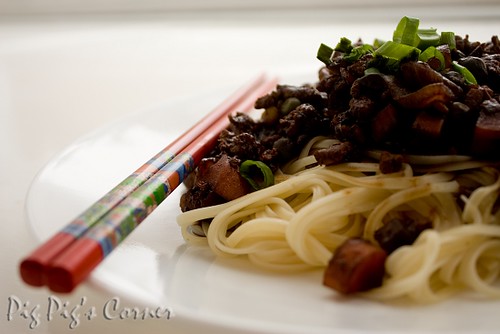
Oh, Korea.
Subscribe to:
Posts (Atom)